Srikant Mehra

Available for product design roles

New Delhi

Product designerDesign lead at FitFare

I design the software people use all day at work, from the problem to the details that ship.

About

I’m Srikant. I went from intern to design lead, and along the way I’ve seen people at their most frustrated with a product (sometimes mine) and at their happiest. I’m in it for the second one.

Now
Design lead at FitFare, since April 2026
Before
Lead product designer at iDesign.Market, 2022–2026
Background
B.Tech in computer science, 2015–2019
Side projects
Apps and tools I design and build

Selected work

Selectedwork

Six projects, most built around someone’s bad moment: an architect hunting for the latest drawing, a diner stuck in a long card application, someone who wants one gym class without a membership, a gamer with no one to learn from. And one website nobody asked me to redesign. Every screen here is mine.

  1. 01File ManagerB2B web app2023–2025
  2. 02Vendor & POB2B web app2023–2025
  3. 03EazyDiner EliteAndroid app2024, 2026
  4. 04FitFareMember app and partner portal2026–now
  5. 05EvolveAndroid app2022, 2026
  6. 06iDesign websiteMarketing website2026

01 / 06iDesign.MarketDocument management2023–2025Shipped

File Manager

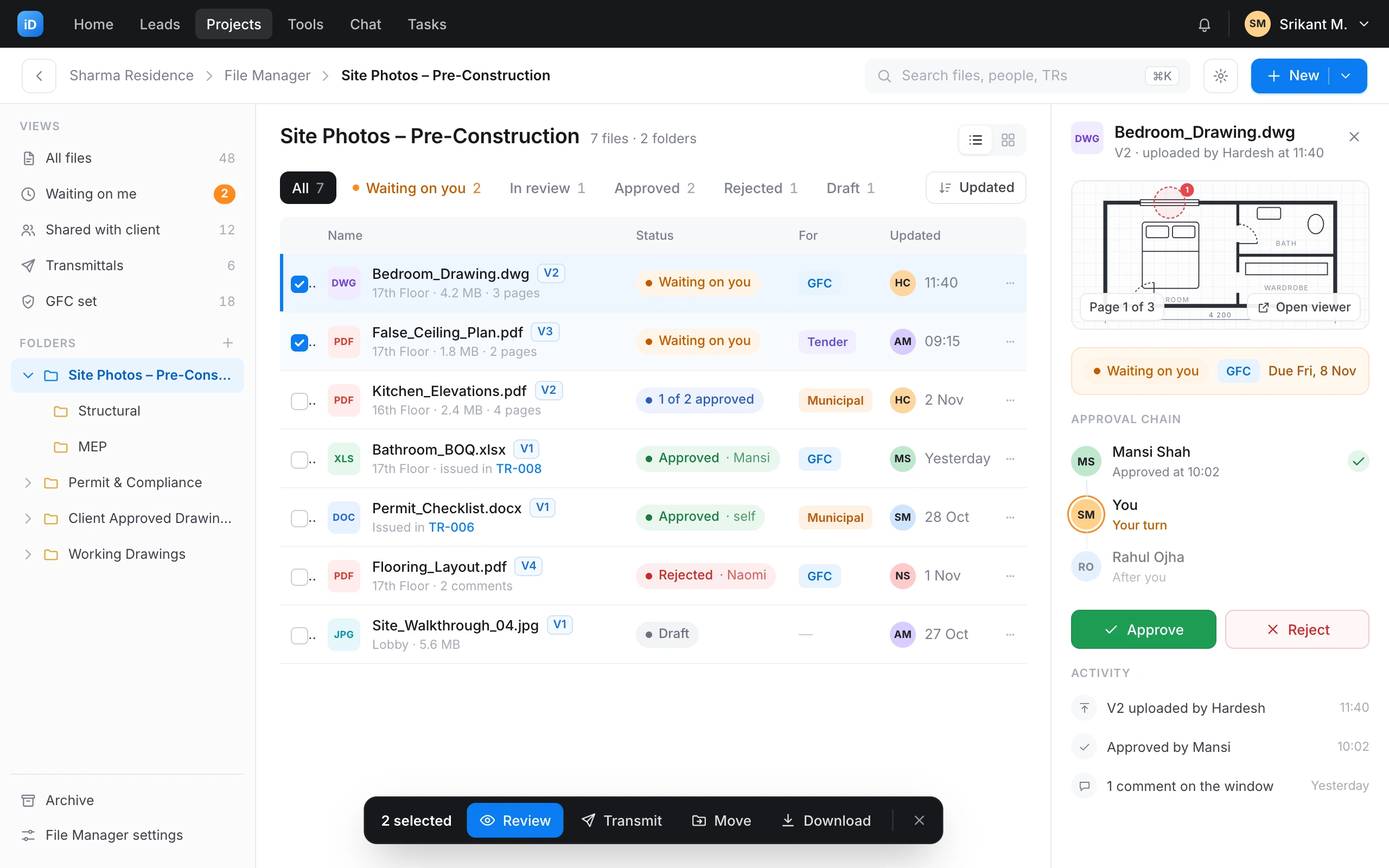
The files screen, redesigned in 2026: a left rail with a Waiting on me view, one status chip per file with the state first and the person second, and a detail panel with the approval chain.

Document management for architecture firms, so nobody builds from the wrong drawing.

Drawings at architecture and interior firms get revised constantly, and approvals used to happen over WhatsApp. People lost track of which version was current and who had it, so an old drawing could end up on site.

File Manager keeps every drawing in one place, and each one shows whether it’s approved and who it’s waiting on. Every file has its own viewer and history, and drawings go out on numbered transmittals.
02 / 06iDesign.MarketProcurement2023–2025Shipped

Vendor & PO

  1. 01Quotation
  2. 02Material request
  3. 03Purchase order
  4. 04Delivery
  5. 05Invoice
  6. 06Payment
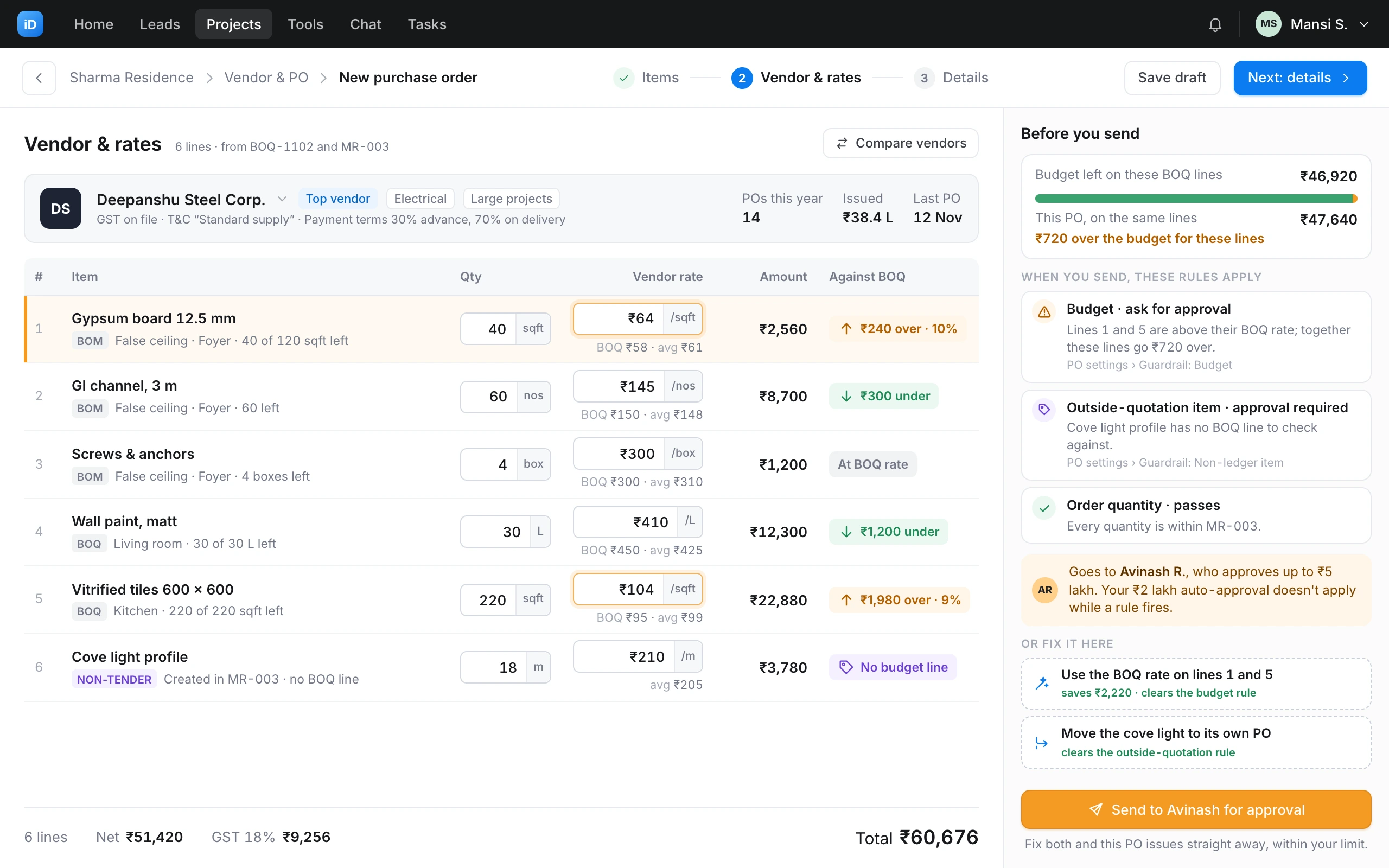
Create PO step 2, redesigned in 2026: each vendor rate with the BOQ rate under it and the difference in rupees, and a Before you send panel with the remaining budget, the rules that apply and the approver.

Purchasing for interior design projects, with every order checked against the budget.

On an interior project, the client approves a quote, and the purchase team then buys materials against it from different vendors. Rates and quantities could drift away from that quote, and there was no shared check on it.

Vendor & PO follows each order from the quote to the vendor’s payment. When someone creates a purchase order, it’s compared with the quote and the firm’s spending rules, and if anything is over, it goes to someone who can approve it, with the reason spelled out.

03 / 06Design assignmentCo-branded credit card2024, redesigned 2026

EazyDiner Elite

The card home as designed in 2024.
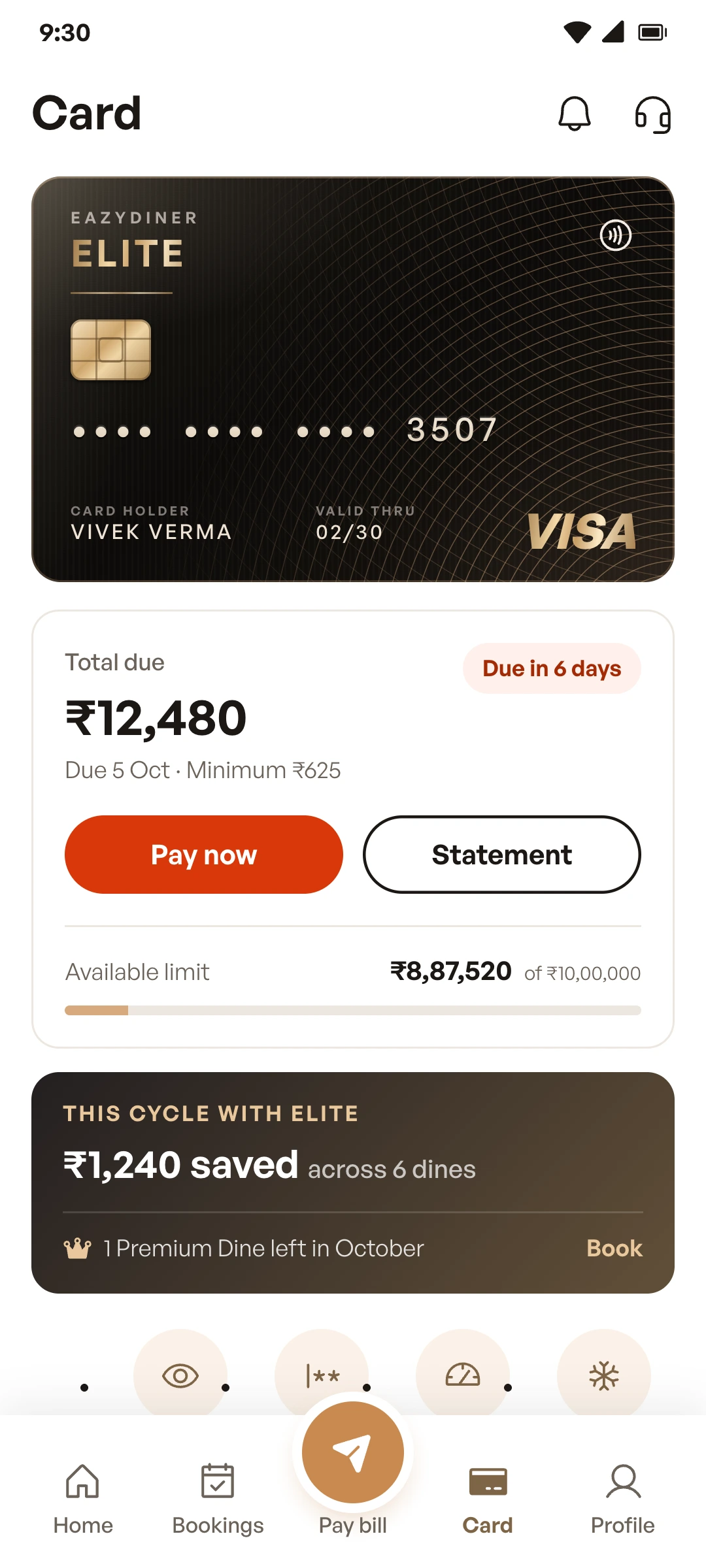
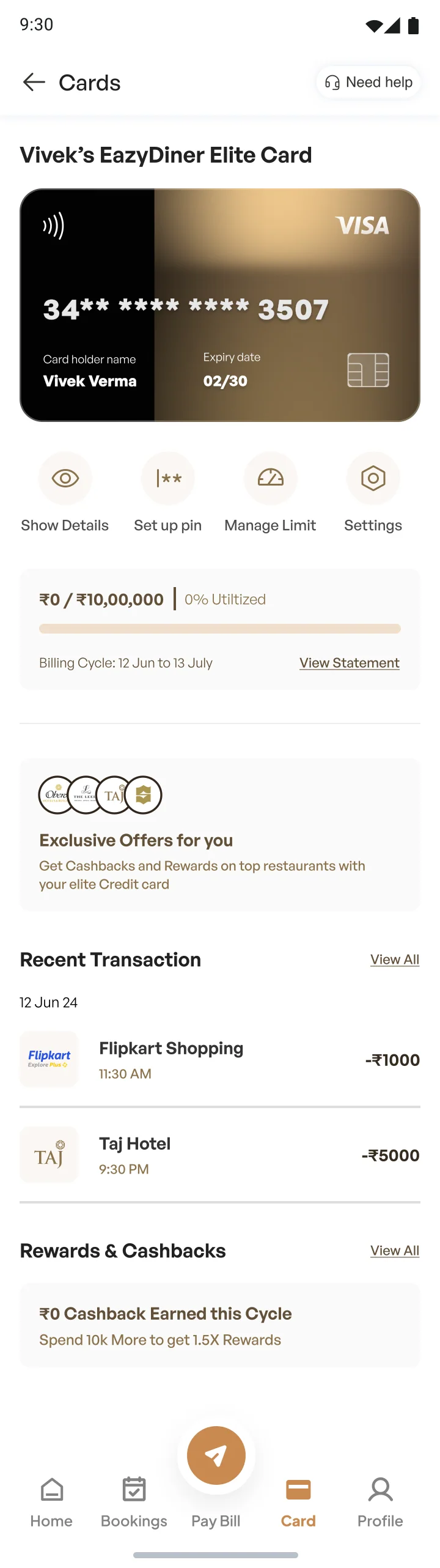
The card home as redesigned in 2026: the total due, ₹12,480 in 6 days, with Pay now, comes first.

Applying for a credit card without leaving a restaurant app.

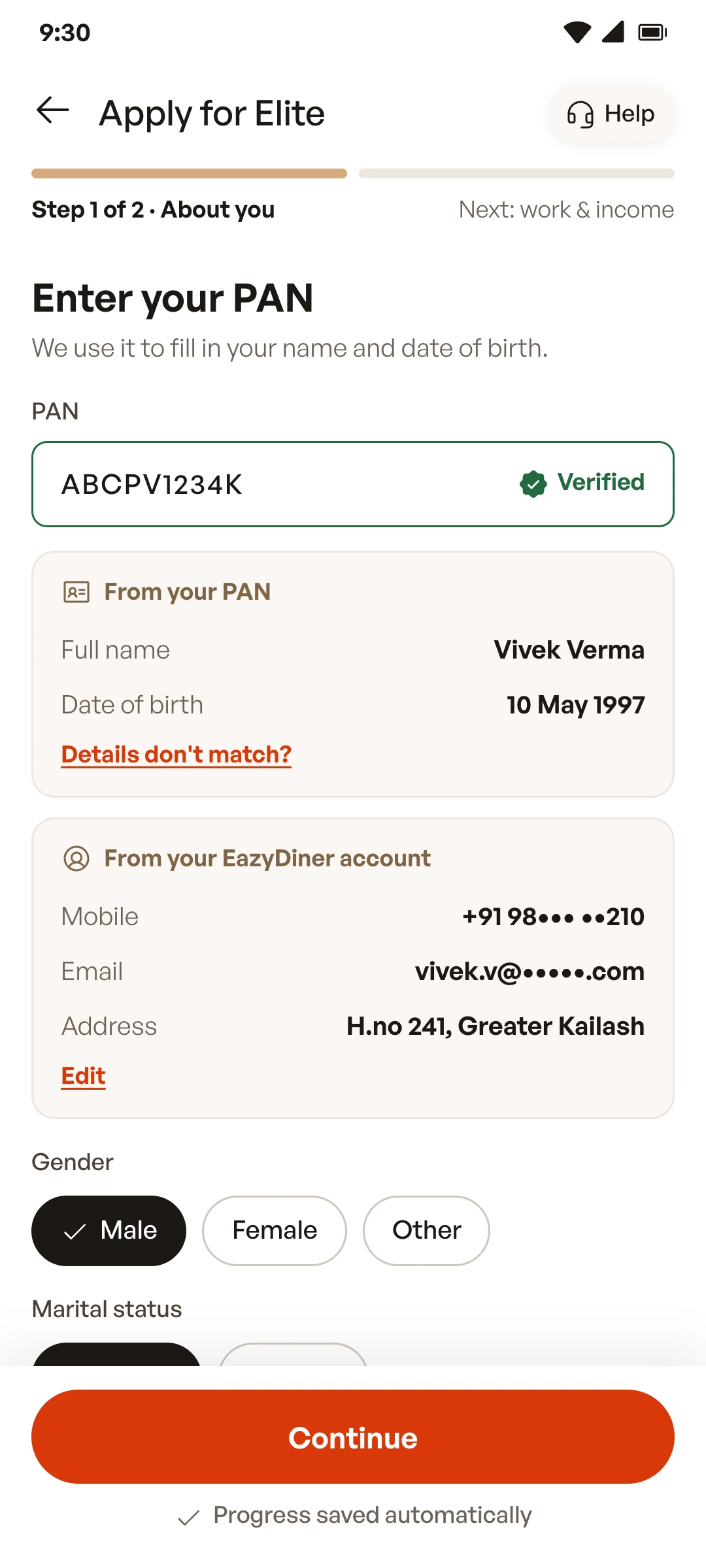
Apply, step 1 of 2, 2026: the PAN first, with the name and date of birth filled in from it.
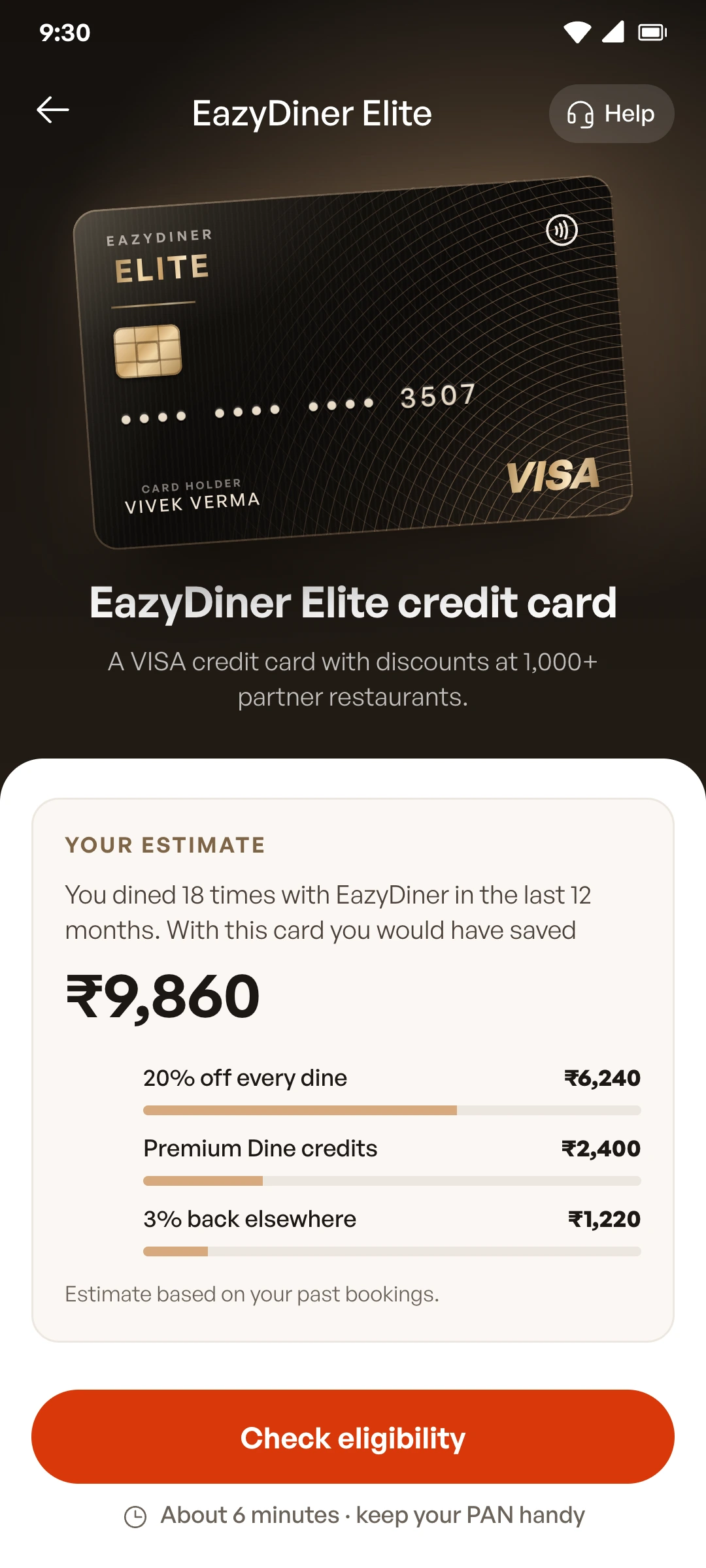
The Elite card landing page, 2026, with an estimate of what the card would have saved you.
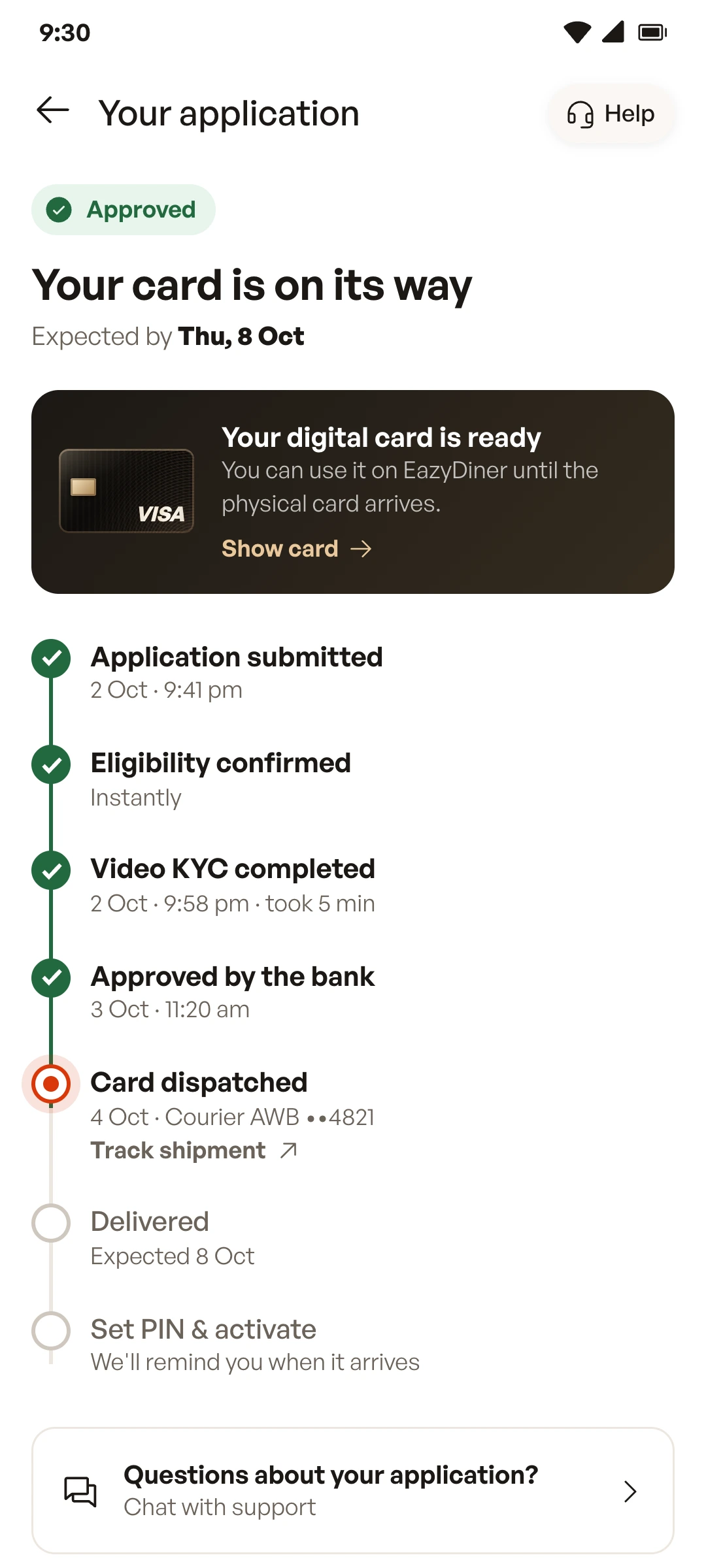
The application tracker, 2026: approved, the card on its way, and a digital card to use now.

EazyDiner members already save on meals, and they could save more with its credit card. But getting one means a long bank form with an identity check, then days of waiting, all in an app people open to book a table.

In my design the whole application stays inside EazyDiner, apart from the bank’s video KYC. Your PAN fills in your name and date of birth, and once you’re approved there’s a digital card to use while the real one is on its way. When I went back in 2026, I found six things I’d missed and fixed them.

04 / 06FitFareProduct and brandLive · design ongoing

FitFare

A fitness app where you pay for each session and skip the membership.

Most gyms and fitness apps here sell plans of three months or longer. That’s a bad deal if your free hour moves around every week, or if you’ve just moved to a new city and don’t know which gym is any good.

On FitFare you book one session at a time at partner gyms and studios. You pay with credits, and if some are about to expire, you can send them to a friend.

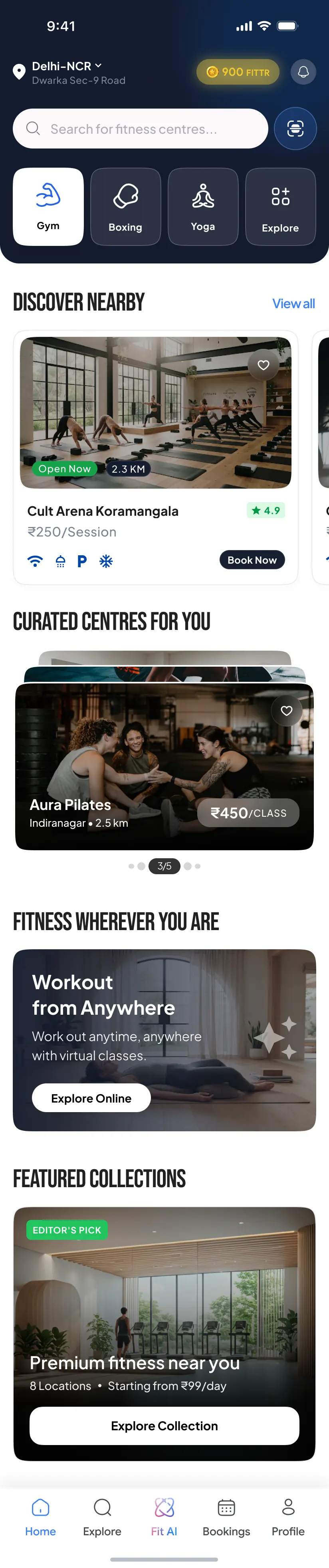
FitFare home, scrolled from top to bottom.
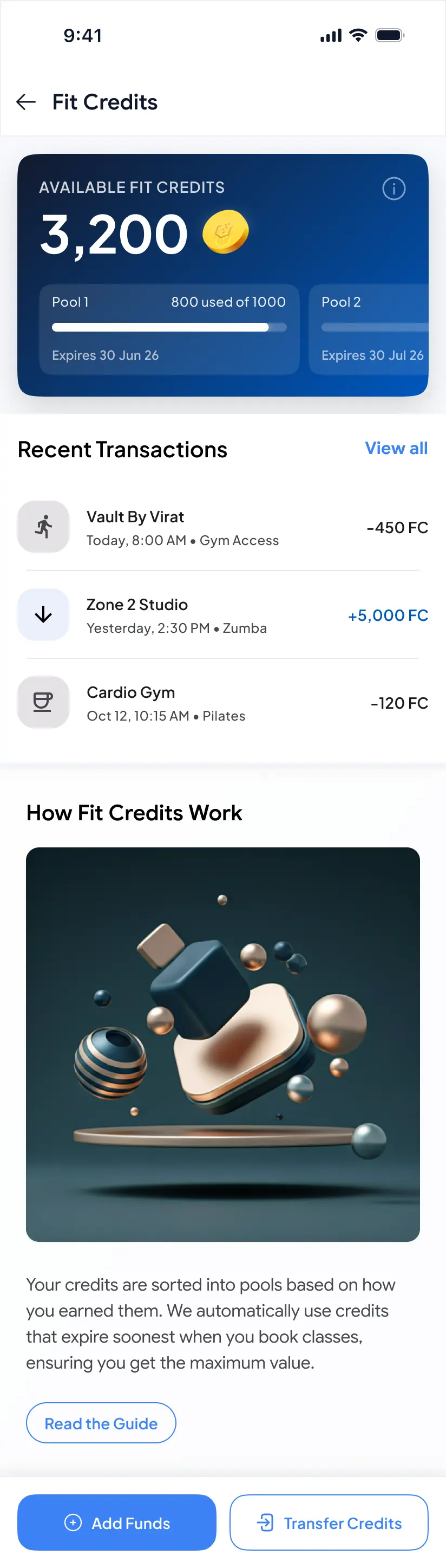
The Fit Credits wallet: balance, two credit pools with expiry dates, recent transactions.
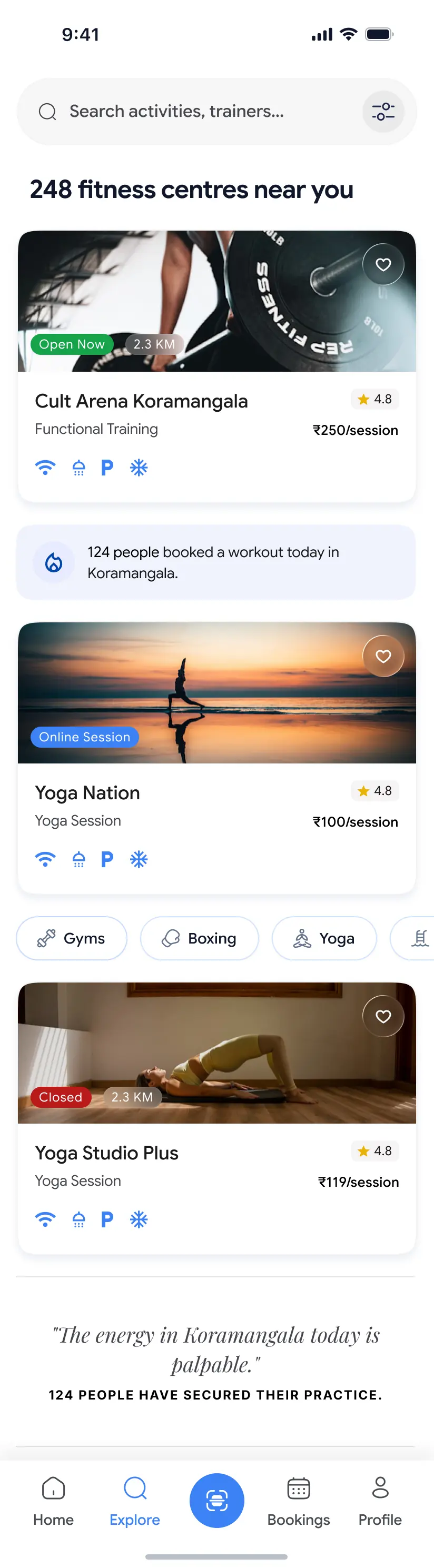
Explore: fitness centres nearby, with filters.

05 / 06Concept projectGaming and health2022, redesigned 2026

Evolve

Survey responses, before any screens
24
Wireframes
37
High-fidelity screens
44
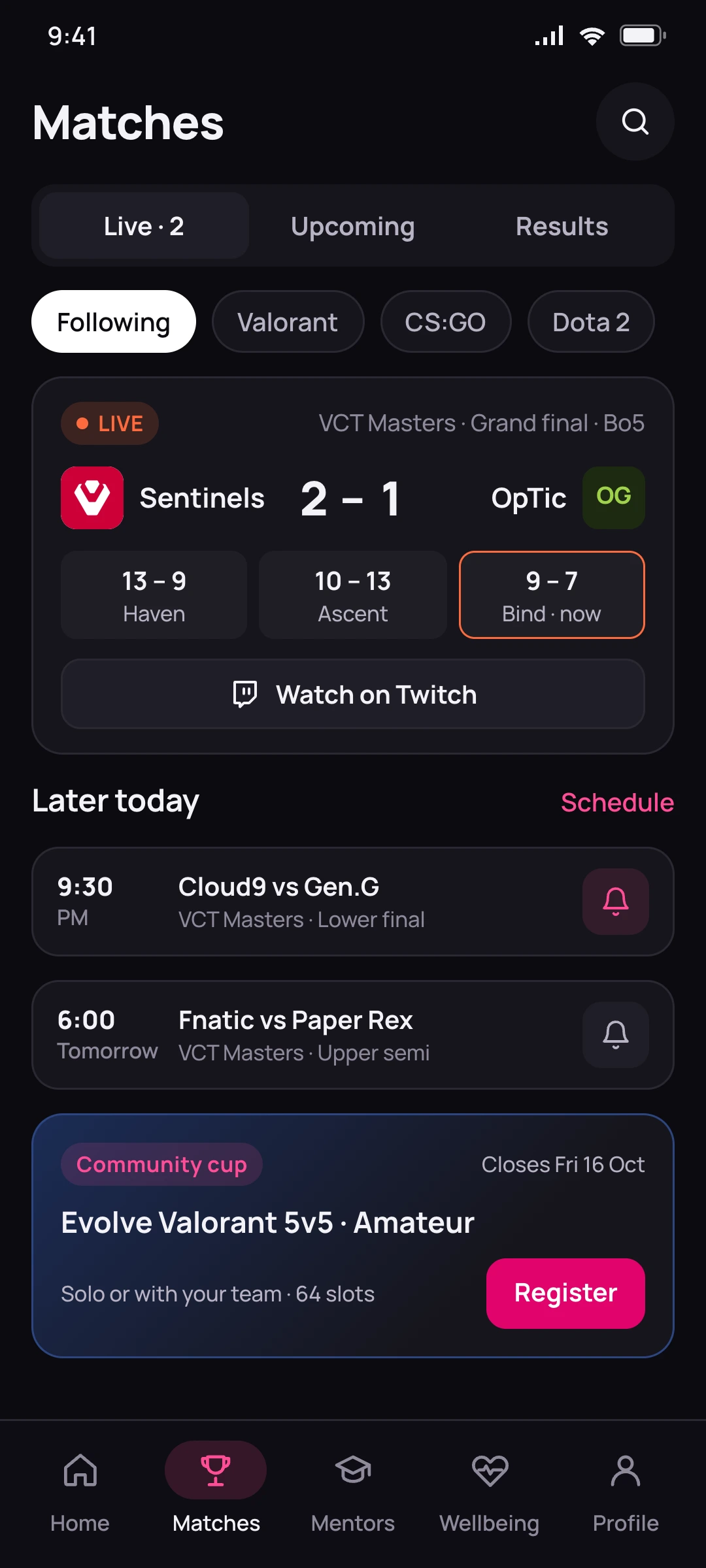
Matches: the live VCT Masters final, with map scores.
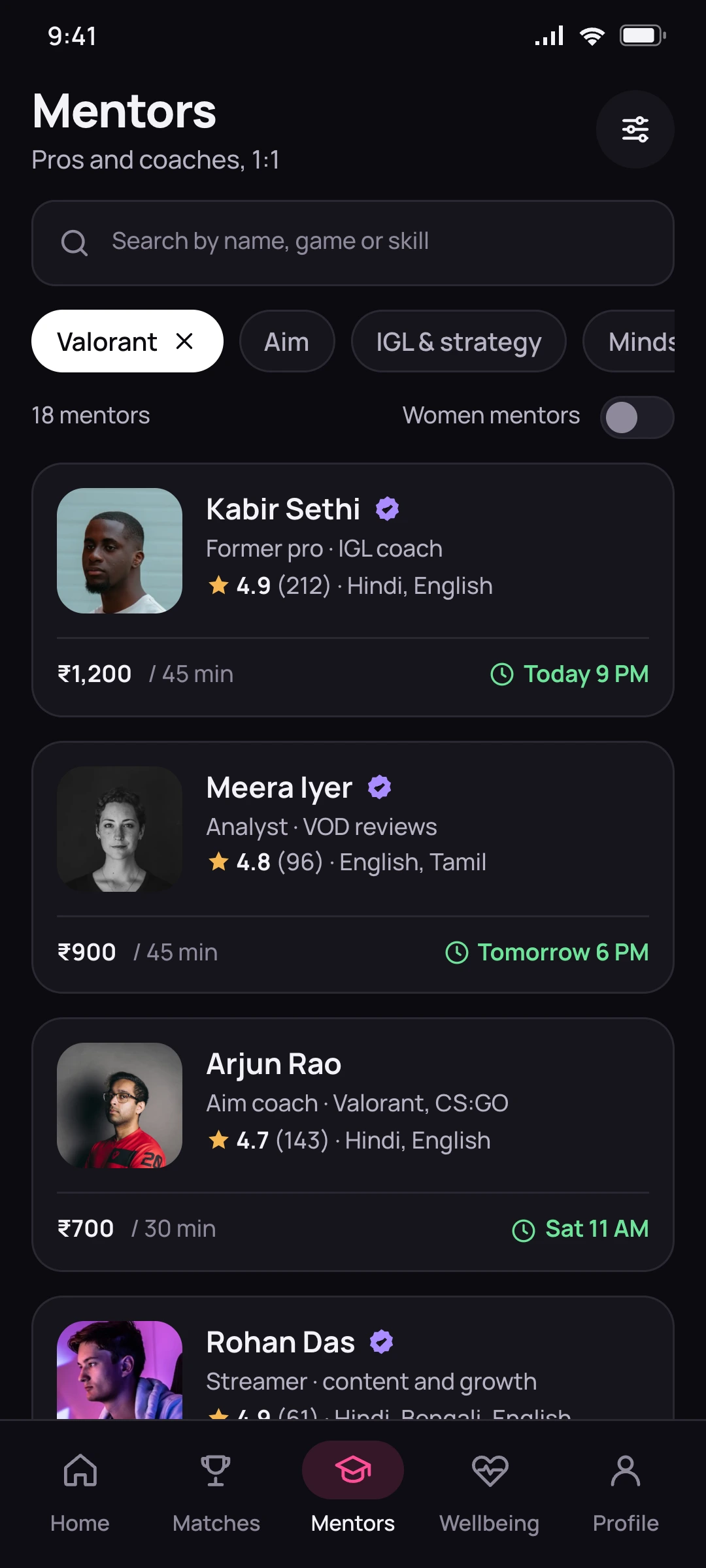
Mentors, filtered to Valorant, with a Women mentors switch.
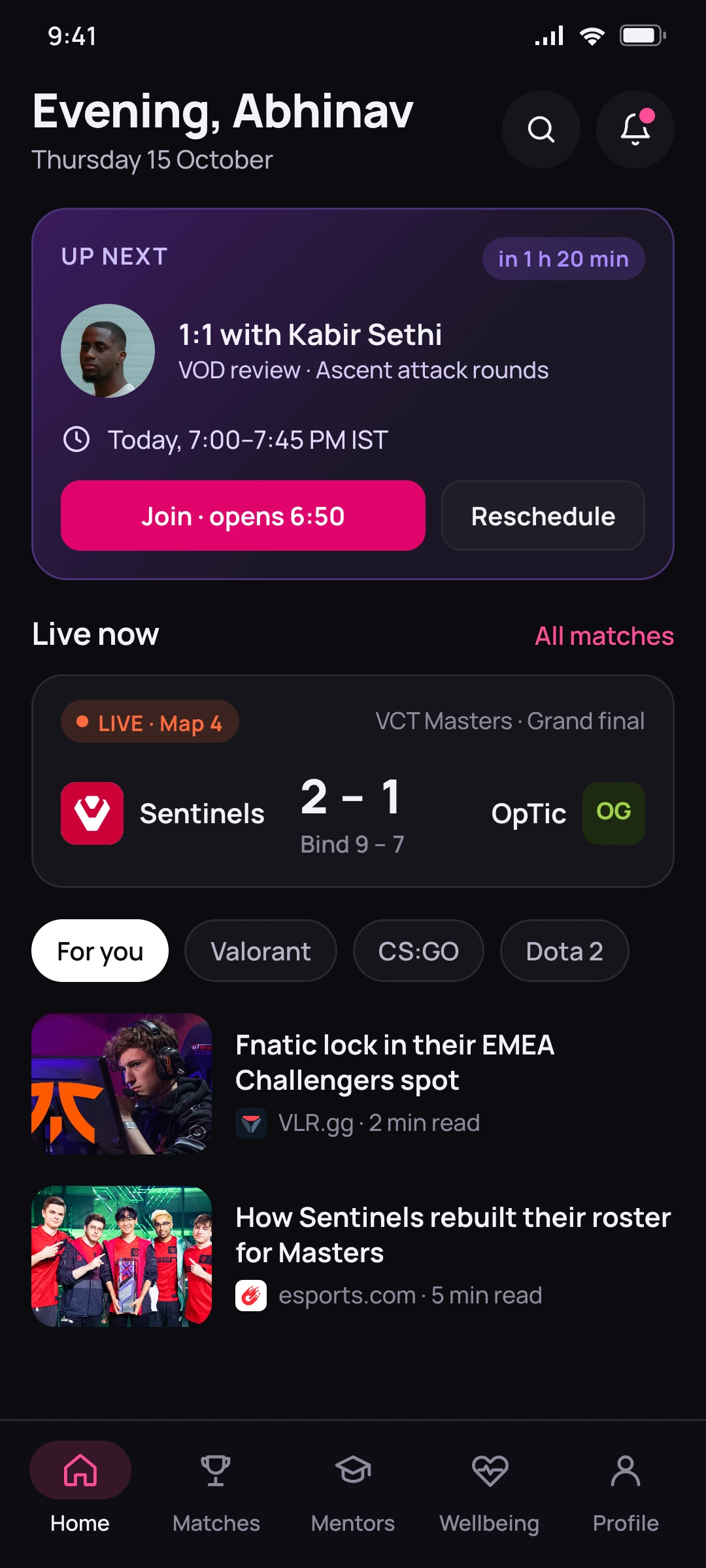
Home: an Up next card for a 1:1 session with Kabir Sethi.
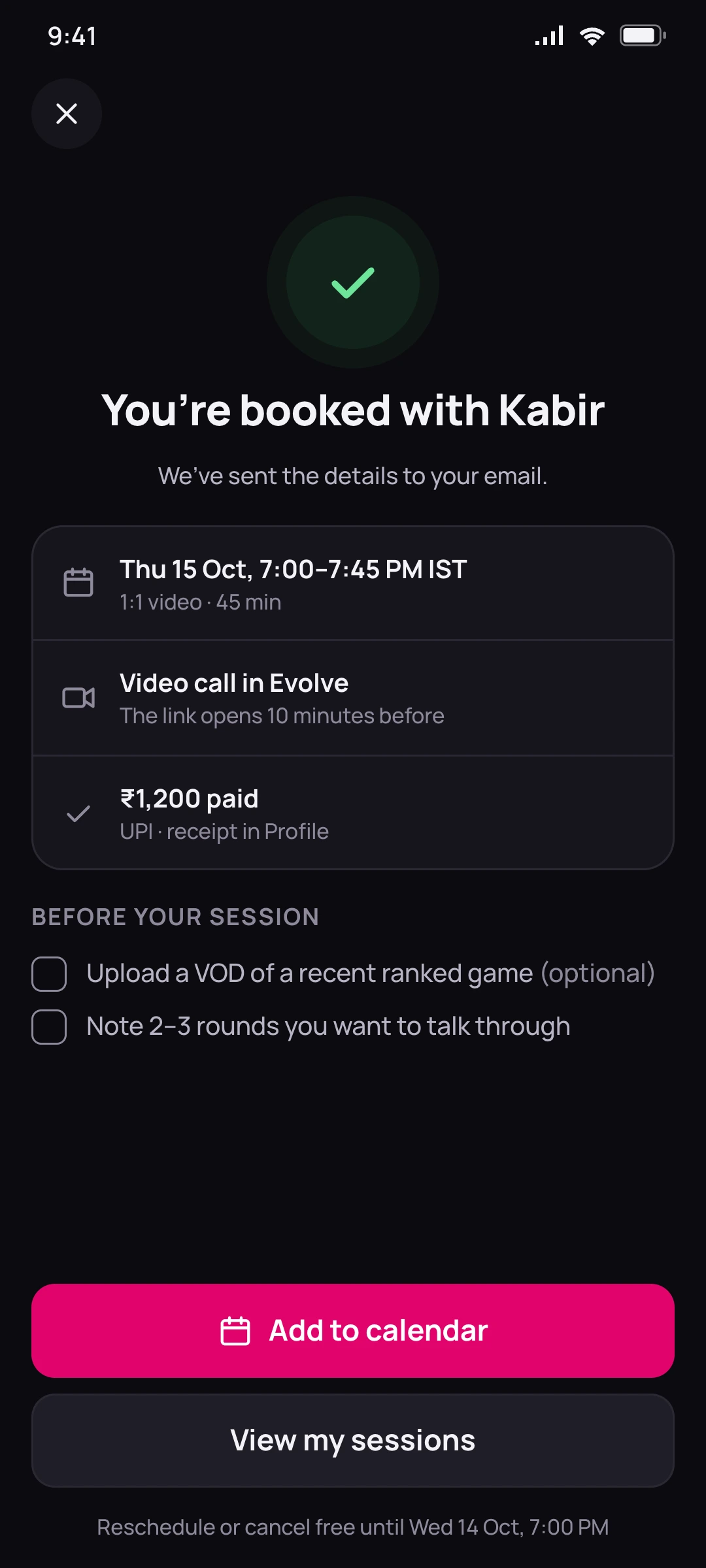
Booked: the session time, the call link and what to prepare.
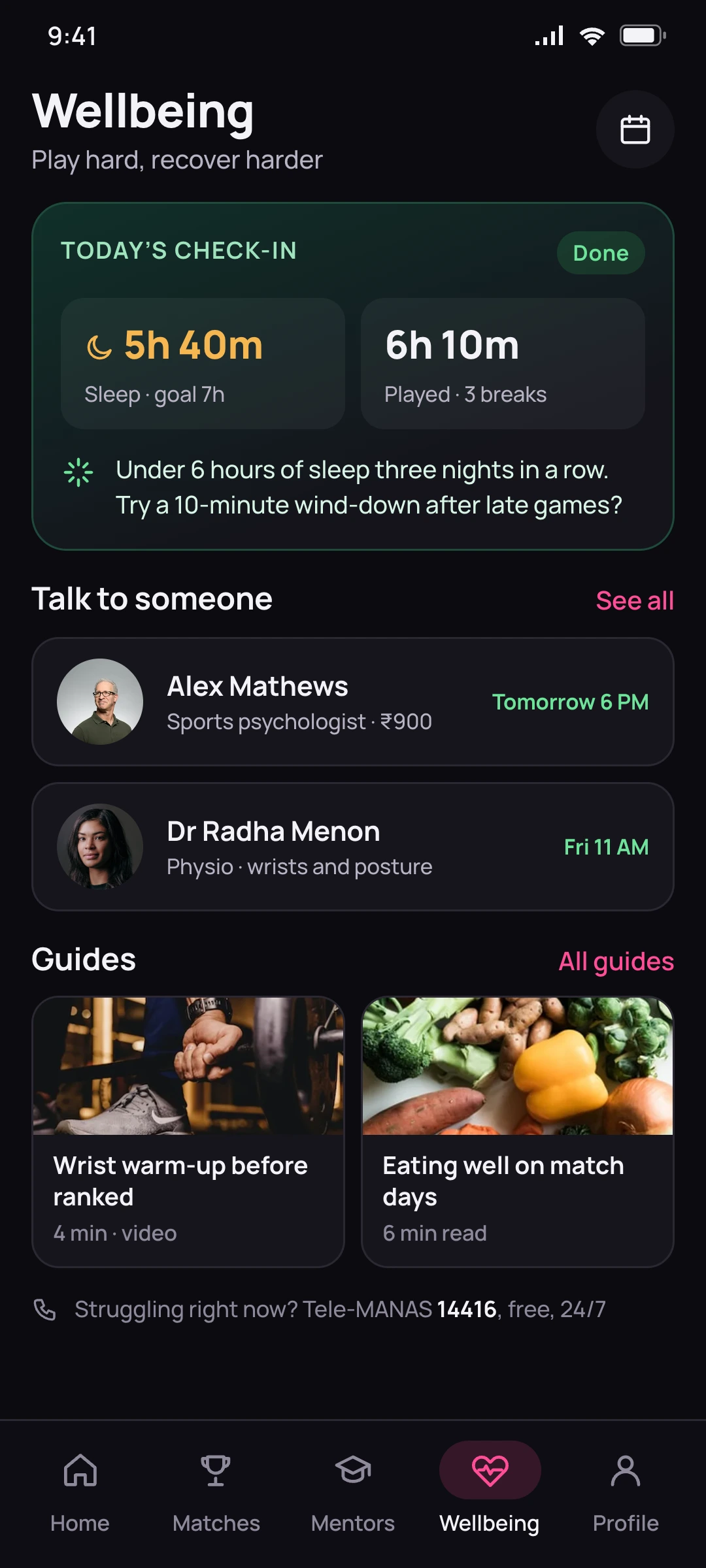
Wellbeing: today's check-in on sleep and play, and someone to talk to.

Helping gamers get better with pro mentors, without wrecking their health.

Outside pro teams, there’s almost no coaching for players who want to get better, and the advice online is generic and scattered across YouTube and forums. Long sessions also bring wrist pain and lost sleep, and that side rarely gets talked about.

Evolve is a concept app where amateur and semi-pro gamers book one-to-one sessions with pro players, and talk to health professionals when they need to. There’s also a daily check-in on sleep and play.

06 / 06iDesign.MarketMarketing website2026, prototype

iDesign website

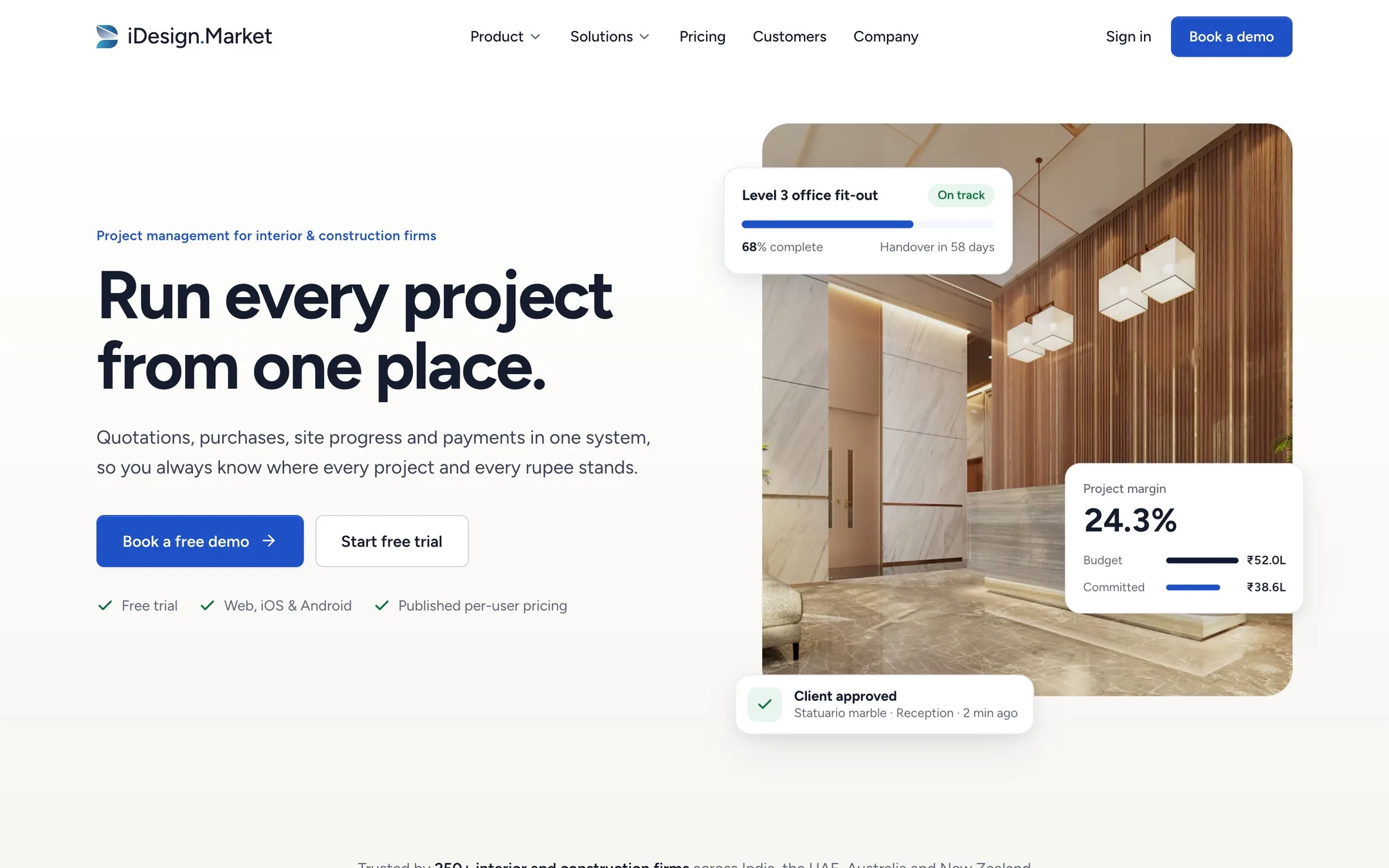
The redesigned homepage: Run every project from one place, a demo and a trial button, and a finished reception with three product cards for progress, margin and a client approval.
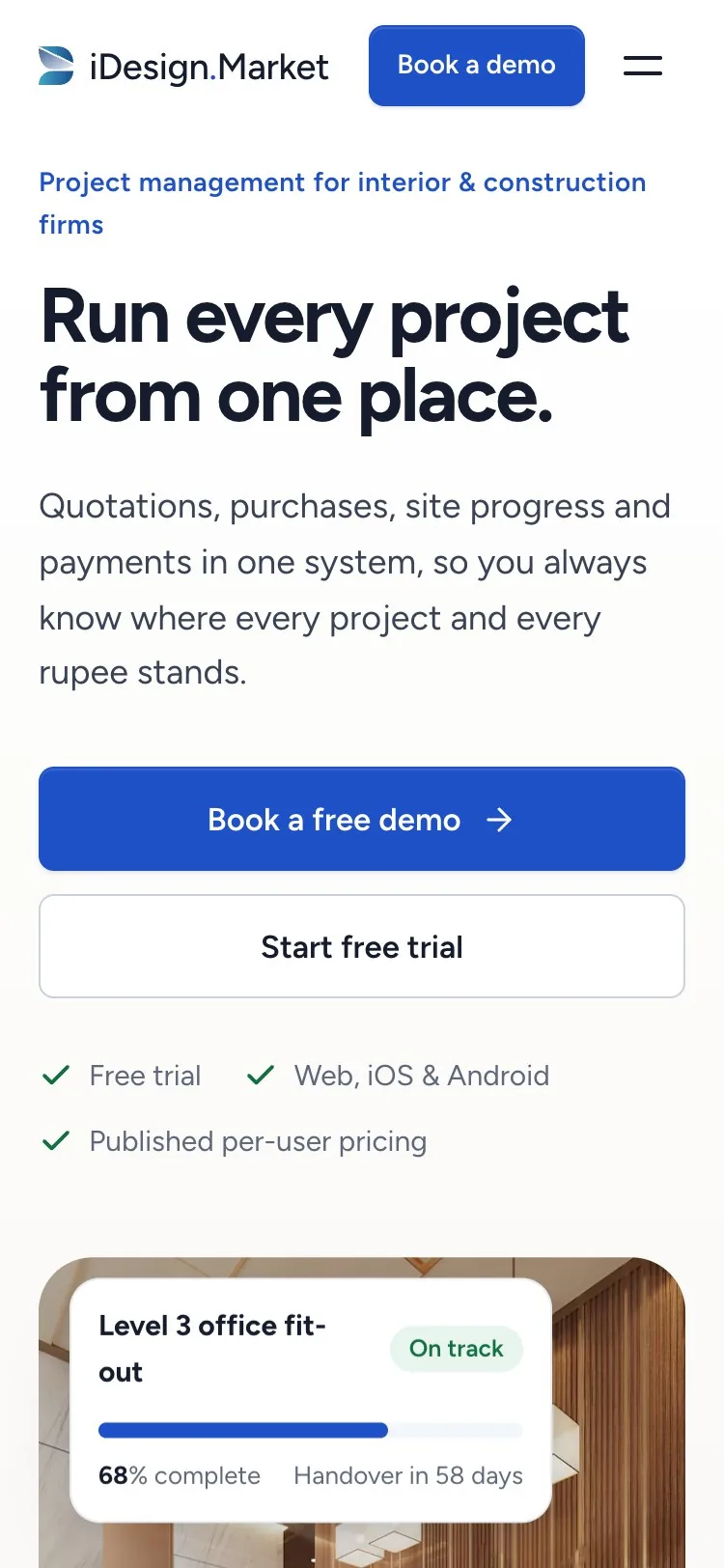
The same hero on a phone: full-width buttons, and the photo with its progress card below.

A new website for project software, so a firm owner gets it in one screen.

iDesign.Market’s old website opened with a claim that could describe any project tool, and the product only showed up as small cards over stock photos. The thing that sets it apart, tracking materials from the first estimate to paying the vendor, appeared once, deep inside a feature block.

The redesign is built around one line, “Run every project from one place.” The product is the first thing you see, shown large with realistic project data, and real customers come right after.

How I work

Researchto release

Most of what I design is software people didn’t choose. Their company bought it and they’re in it all day, so a confusing screen isn’t a small annoyance. It’s a cost they pay every day.

  1. 01

    Research

    When a project allows, I start by watching people work: interviews and session recordings first, then usability sessions. At iDesign.Market I ran usability sessions with more than 100 users.

  2. 02

    Flows

    Then I write the flow down: who does what, in what order, and where it breaks. Most problems surface here, before there’s a screen to argue over.

  3. 03

    Wireframes

    I use grey wireframes with real words where possible. Without colour, the review stays on one question: does the flow work?

  4. 04

    States

    Empty, loading, error, done. These screens rarely make the demo, but they’re often where people get stuck. When people keep making the same mistake, I treat it as a design bug.

  5. 05

    Visual design

    I bring type, colour and components into a shared design system so the product stays consistent as it grows.

  6. 06

    Build

    I test feasibility with engineers early, then stay in the build with specs, edge cases and design reviews until it ships.

Experience

Since 2015

Full résumé

2015 to 2019

B.Tech, computer science

Delhi Technical Campus, Haryana

Engineering first. It still shapes how I design.

November 2021 to May 2022

Product design intern

iDesign.Market

I set out on my first design role with a new product line and the founders’ rough ideas. I ran usability sessions with 100+ users, and what I saw there became the product’s structure and first flows.

June to October 2022

UI/UX design intern

TutorBin

My next stop was TutorBin, working alongside the marketing, sales and SEO teams on the main interface. I followed the referral flow to the point where people were dropping out and redesigned it. Retention on that flow rose 50%.

November 2022 to April 2026

Lead product designer

iDesign.Market

I returned to iDesign.Market to lead the design team, this time on the B2B platform that architecture and interior firms run their projects on. Over more than three years I rebuilt procurement and document management, and redesigned client onboarding for 60% less transition time. I defined how the predictive features behave and built the design system along the way.

April 2026 to now

Design lead

FitFare Now

In April 2026 I took on FitFare as design lead. It’s a fitness platform where you pay per session and never sign up for a membership, and I design both sides of it: the app members book with and the portal studios run it from.

Side projects

Designedand built

Tools I needed for my own work, mostly Mac apps. I design them, then I write the code.

Glitter

Open an app from the dock or the menu bar. Drag any window to move it.Tap an app in the dock to open it.

Outside work

Worthyour time

Films, anime and books I keep pressing on people. Turn a card over for a moment or a thought from each.

Contact

Let’s make
complex work
feel clear.

I’m open to new product design roles. Wherever I land, I want to own the work from research to build, and be around when people start using it.

Say hello

Email reaches me fastest

Availability
Open to product design roles
Local time
New Delhi, IST, UTC+5:30
Elsewhere
Résumé
One page, PDF